WEBINAR
Personnel Records:
What to Keep, What to Toss
Tuesday, February 3 • 1:00 p.m. (Eastern)
Unlock the Secrets of HR Recordkeeping: From Clutter to Compliance
Maintaining personnel records used to be simpler. HR departments often relied on a “keep everything” policy to play it safe. However, this outdated approach can now violate rules on the “reasonable disposal of sensitive documents.” But destroying the wrong document can lead to hefty fines and penalties, accusations of willful evidence destruction and even the loss of a lawsuit.
On the other hand, not creating and maintaining required records can also pose legal risks. Laws mandate documentation for many processes, and it’s often wise to keep thorough records, from job applications to disciplinary notes. Knowing when to keep and when to dispose of them is crucial.
On February 3, start the year off right by joining expert employment lawyer Carrie Hoffman, partner at Foley & Lardner, LLP, as she takes an engaging dive into how to eliminate HR paperwork clutter while maintaining lawsuit-proof “armor” for your personnel records. She’ll explain HR recordkeeping requirements under federal, state and local laws and regulations.
Don’t fall victim to avoidable mistakes! In employee legal disputes, the winning side often has the best-documented case.
WEBINAR AGENDA:
- Retention periods. Discover exactly how long to retain various documents, including applications, résumés, FMLA forms, payroll records, leave requests, medical data, benefits information and more.
- Follow EEOC requirements and state laws. If you operate in multiple states, check the laws in each state where you do business.
- E-mail and internal memoranda. Remember that information in email and internal memos are discoverable. Learn what policies to adapt when it comes to this type of correspondence.
- Performance records. Learn key dos and don’ts for recording performance discussions and termination documents.
- Investigation documents. Learn how to record investigative issues, how to retain these files and where.
- OSHA/safety and health. What to record when it comes to OSHA and safety and health records, as well as retention periods.
- Document storage. Understand the proper way to organize documents, which ones need to be maintained in separate files and how electronic storage rules differ from those for paper storage.
- Indispensable records. Learn which records should never be deleted and why, as well as the requirements for storing and deleting communication records.
- Personnel file requests. Know what to do when lawyers or employees ask to review personnel files—this varies by state and timing of the request.
YOU’LL DISCOVER:
✔ What to create and keep, for how long and where. Discover an airtight, step-by-step records-management strategy.
✔ How to write legally safe HR documents. Learn 10 simple steps to keep you in compliance.
✔ The different rules for paper and electronic records. Retention and disposal procedures can vary widely.
PRESENTED BY:

Carrie B. Hoffman is a partner in the Dallas office of Foley & Lardner, LLP. She advises and represents employers in litigation covering labor and employment issues in both federal and state courts across the country. She is also a trusted advisor to employers on all aspects of labor and employment law, including wage-and-hour matters, OSHA, employment contracts and noncompetes, union avoidance and negotiations, leaves of absence, handbooks, and harassment and discrimination issues.
REGISTRATION BONUSES:
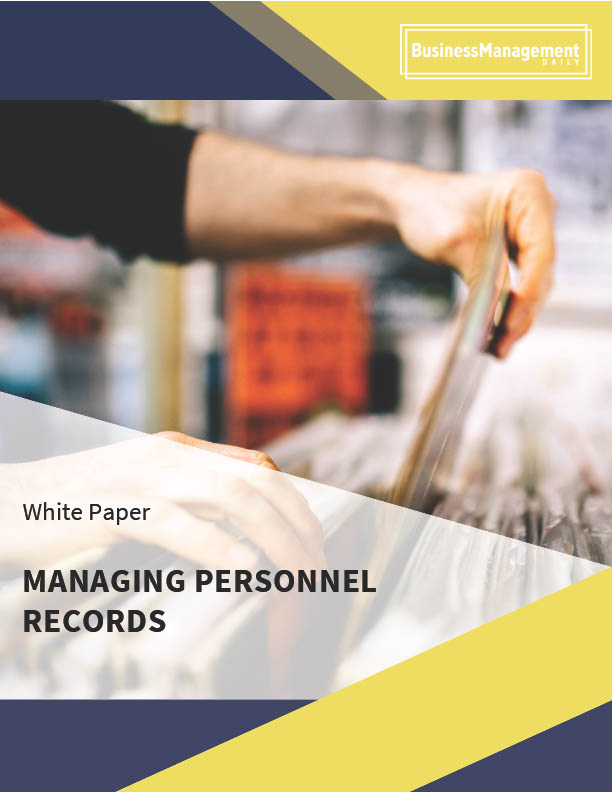
Everyone who signs up will receive a copy of Managing Personnel Records, which will show you how to turn all your HR paperwork into “lawsuit-proof armor.” In this special report, you’ll learn how a sound records-retention policy can keep your organization out of the courtroom.
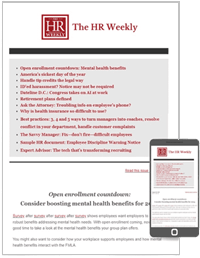
You’ll also receive one month of exclusive access to The HR Weekly, our comprehensive service with all the HR advice and compliance tools to simplify your job … and to keep your organization out of court. So that you continue to benefit from The HR Weekly, we will continue your subscription after that for the then current rate, unless you tell us “no, thanks”—your choice.
RECERTIFICATION CREDITS:
Business Management Daily is recognized by SHRM to offer Professional Development Credits (PDC) for SHRM-CP® or SHRM-SCP® recertification activities.
This Program has been pre-approved for 1.25 HR (General) credit hours toward aPHR®, aPHRi™, PHR®, PHRca®, SPHR®, GPHR®, PHRi™ and SPHRi™ recertification through HR Certification Institute® (HRCI®).
Save 90% on a Complete Year of Training Webinars
Train Big. Save Big. Win Big.
Access around 100 live, expert-led training sessions each year… for just $1,599

WE PROMISE YOU’LL BE SATISFIED:
If this webinar fails to meet your needs in any way, we will refund 100% of your tuition – every penny you paid – but your course materials and registration bonuses will be yours to keep. No hassles, no questions asked.

P.O. Box 9070, McLean, VA 22102 • (800) 543-2055
Copyright © 2026 • Business Management Daily • All rights reserved